
ErgoTune Supreme V3 Sizing Guide: Small, Medium or Large?

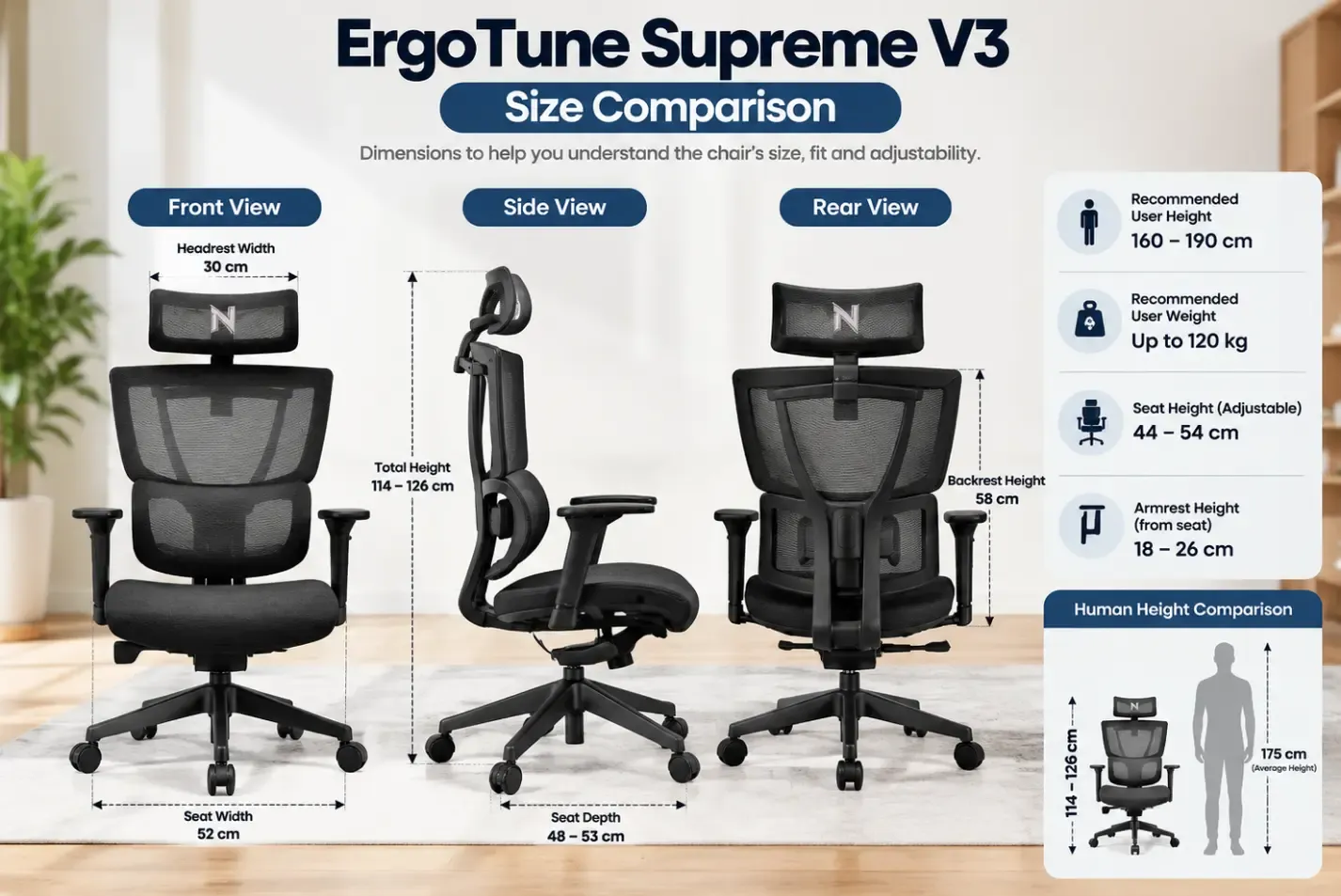
The ErgoTune Supreme V3 is one of the few ergonomic chairs sold in three sizes. That is good news for fit, but it also means you need to pick the right ErgoTune Supreme V3 size. The wrong size can put the lumbar support, headrest and seat depth in the wrong place, no matter how you adjust them. Here is how to choose.
Supreme V3 Size Chart
| Size | Suggested User Height |
|---|---|
| Small | 140–159 cm |
| Medium | 160–179 cm |
| Large | 180–210 cm |
Height ranges are from ErgoTune’s product page. The page lists a user weight range of 32 to 130 kg and a maximum load of 130 kg.
Why Does ErgoTune Supreme V3 Size Matter?
A chair can be highly adjustable and still feel uncomfortable if its basic dimensions do not match your body. Three areas are particularly important.
1. Lumbar support position
Lumbar support is designed to sit in the natural curve of your lower back. If the chair is too large, the lumbar area may sit higher than that curve. If it is too small, the support may sit lower than you need. Sit fully back and check where the support contacts your back; it should feel supportive without forcing your spine into an unnatural position.
2. Seat depth
When you sit back against the backrest, there should be some space between the front edge of the seat and the back of your knees. If the seat is too deep, shorter users may struggle to sit fully back with their feet on the floor. A chair that is too small can leave taller users without enough thigh support. That is why leg length can be more useful than height alone when choosing between two sizes.
3. Headrest reach
The headrest matters most if you recline. A taller user in a smaller chair may find it does not reach the desired position, while on a chair that is too large it may sit too high to align with the head and neck.
Small, Medium or Large: Which Size Is Right?
ErgoTune Supreme V3 Small (140–159 cm)
Consider the Small if you have a shorter overall height or relatively short legs. The smaller dimensions make it easier to keep your feet flat and maintain comfortable clearance behind your knees. Users near the upper end of the range should pay attention to thigh support and headrest position.
ErgoTune Supreme V3 Medium (160–179 cm)
For users in this range, the Medium is the standard size to consider first. If you are near the boundary with Small or Large, do not decide on height alone. Think about leg length, torso length, sitting position and desk setup.
ErgoTune Supreme V3 Large (180–210 cm)
Taller users often need extra seat and backrest dimensions to keep proper support. Large is not automatically better just because you are close to 180 cm, though. If you are tall but have relatively short legs, still check seat depth and foot position.
What If You are Between Two Sizes?
Real bodies do not always fit neatly into three categories. Someone near a boundary may have a long torso and short legs, or the reverse. Consider these factors:
- Leg length: shorter legs may struggle with a deeper seat, while longer legs need enough depth for thigh support.
- Torso length: this affects where the backrest, lumbar support and headrest need to sit.
- Desk height: a high desk forces you to raise the chair, which affects your feet and knee position.
- Who uses the chair: if it is shared, size it for the person who sits in it most.
Extra Tips for Shorter and Taller Users
If you are short, watch seat depth and foot support first. A seat that is too deep is the most common reason shorter users cannot sit back against the lumbar support. If your feet do not reach the floor at desk height, a footrest can help.
If you are tall, check thigh support and headrest reach. A chair that is too small can leave your thighs hanging past the seat edge and the headrest sitting below your head. Choosing the Large size and then setting the seat depth carefully usually solves both.
How to Check the Fit After Delivery
Do not judge the chair after five minutes. Use it during a normal work session, since something that feels fine briefly may feel different after several hours. Then run through this checklist:
- Feet: they rest comfortably on the floor at your normal working height.
- Knees: there is clearance between the seat edge and the back of your knees.
- Lumbar: it contacts your lower back where you need support, without constant posture correction.
- Headrest: it reaches the back of your head when you recline, without pushing it forward.
- Armrests: your arms rest comfortably with relaxed shoulders.
When you are ready to adjust each part, follow our ErgoTune Supreme V3 setup guide in the right order.
Is a More Adjustable Chair Always Better?
Not necessarily. Adjusting a lumbar mechanism or headrest can improve positioning, but it cannot turn a large seat into a small one. There are still physical limits to how far the chair can adjust, which is why choosing the correct size comes before fine-tuning. If you are comparing other ErgoTune models with different size options, see our Joobie vs Vesby vs Supreme comparison.
Quick Decision Guide
- 140–159 cm: consider the Small.
- 160–179 cm: consider the Medium.
- 180–210 cm: consider the Large.
- Close to a boundary: look at leg and torso proportions, not just the number.
For a deeper look at comfort, build and value once you know your size, read our complete Ergotunes Supreme v3 review comparing it with Hinomi and NextChair. If back comfort is your priority, also read whether ErgoTune suits back pain. You can also see how it ranks in our Next chair reviews roundup.
Frequently Asked Questions
What size ErgoTune Supreme V3 should I get?
According to ErgoTune’s listed height ranges, Small is designed for approximately 140–159 cm, Medium for 160–179 cm and Large for 180–210 cm. If you are close to a boundary, also consider your leg and torso proportions.
What is the weight limit of the ErgoTune Supreme V3?
ErgoTune lists a maximum load of 130 kg. The stated user weight range is approximately 32–130 kg.
Can I adjust a chair that is the wrong size?
Adjustments can improve fit, but they cannot completely correct a size mismatch. Seat depth, overall dimensions, lumbar position and headrest reach can still be limiting factors.
Should I choose my chair size based only on height?
No. Height is the best starting point, but leg length, torso length, sitting posture, desk height and how you use the chair can also affect the ideal fit.
More From Titan Reviews